- contact@divsystems.in
- Mon - Fri: 10.30 am - 7.30 pm
We are creative, ambitious and ready for challenges! Hire Us

Overview
Div Systems built the property and asset portfolio system for an infrastructure group holding land and buildings across multiple jurisdictions, covering the asset record, its insurance, its leases in both directions, the borrowings secured on it and the litigation attached to it.
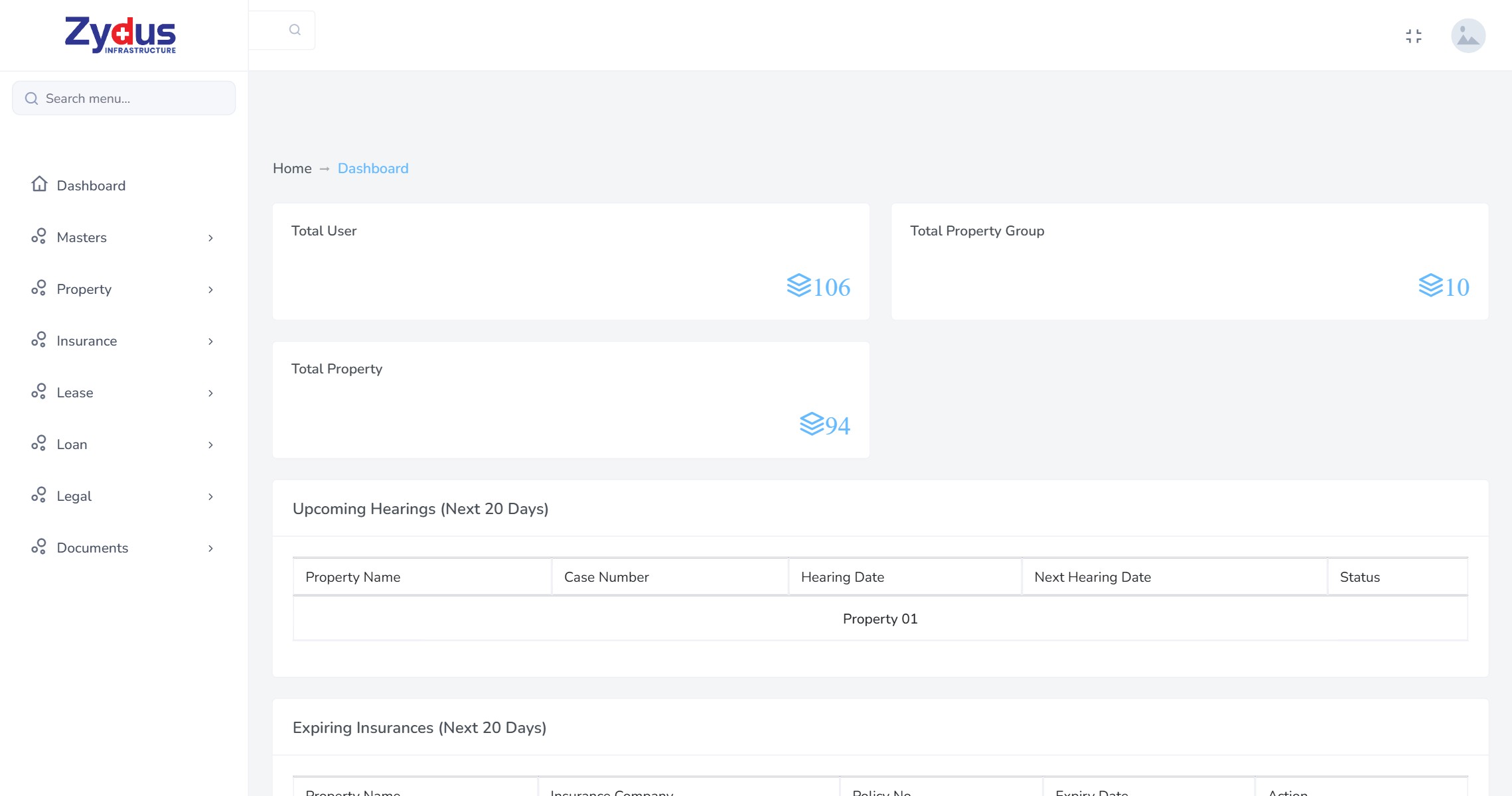
Each property carries its identity, location, measurement, permissions and status. Around it sit policies with renewal dates, leases with terms and instalments, loans with security marked against the asset, and court matters with hearing dates. The dashboard shows the two things that actually cause loss: policies about to lapse and hearings about to happen.
Business need
Indian land title is presumptive rather than guaranteed. The state registers transactions, not ownership, so a corporate landholder's own records are a substantial part of what protects the asset. That makes a property file less like an inventory entry and more like a case file that has to stay current for decades.
The scale of the surrounding risk is documented, though it is routinely mis-cited. NITI Aayog's Three Year Action Agenda states that nearly 67 per cent of litigants in civil cases are using the judicial system for land or property related cases. A study of Delhi High Court records by NIPFP, covering more than 90,000 disposed cases, found immovable property in about 17 per cent of all disputes there. Both are accurate about different denominators, and together they say the same thing: land disputes are a very large share of what Indian courts do.
Encroachment is audited rather than anecdotal too. The Comptroller and Auditor General's performance audit of a state industrial development corporation, holding estates directly comparable to a Gujarat industrial landholding, examined encroachment on corporation land as a standing finding.
Against that, a group holding many properties needs a system that can:
Our solution
Every record in the system points at a property. A policy insures one. A lease grants or takes one. A loan is secured on one. A case concerns one. That sounds obvious and is the thing most portfolios get wrong, because insurance sits with finance, leases sit with legal, and litigation sits with an external advocate, so nobody holds the whole picture of a single asset.
Grouping the portfolio adds the second view. Properties belong to groups and to jurisdictions, so the same data answers both the asset-level question and the portfolio-level one: what is exposed, what is expiring, what is encumbered.
The dashboard then does the only thing that matters daily. It surfaces what is about to lapse or be heard, because in this domain the loss almost never comes from not having the record. It comes from not looking at it in time.
Key features
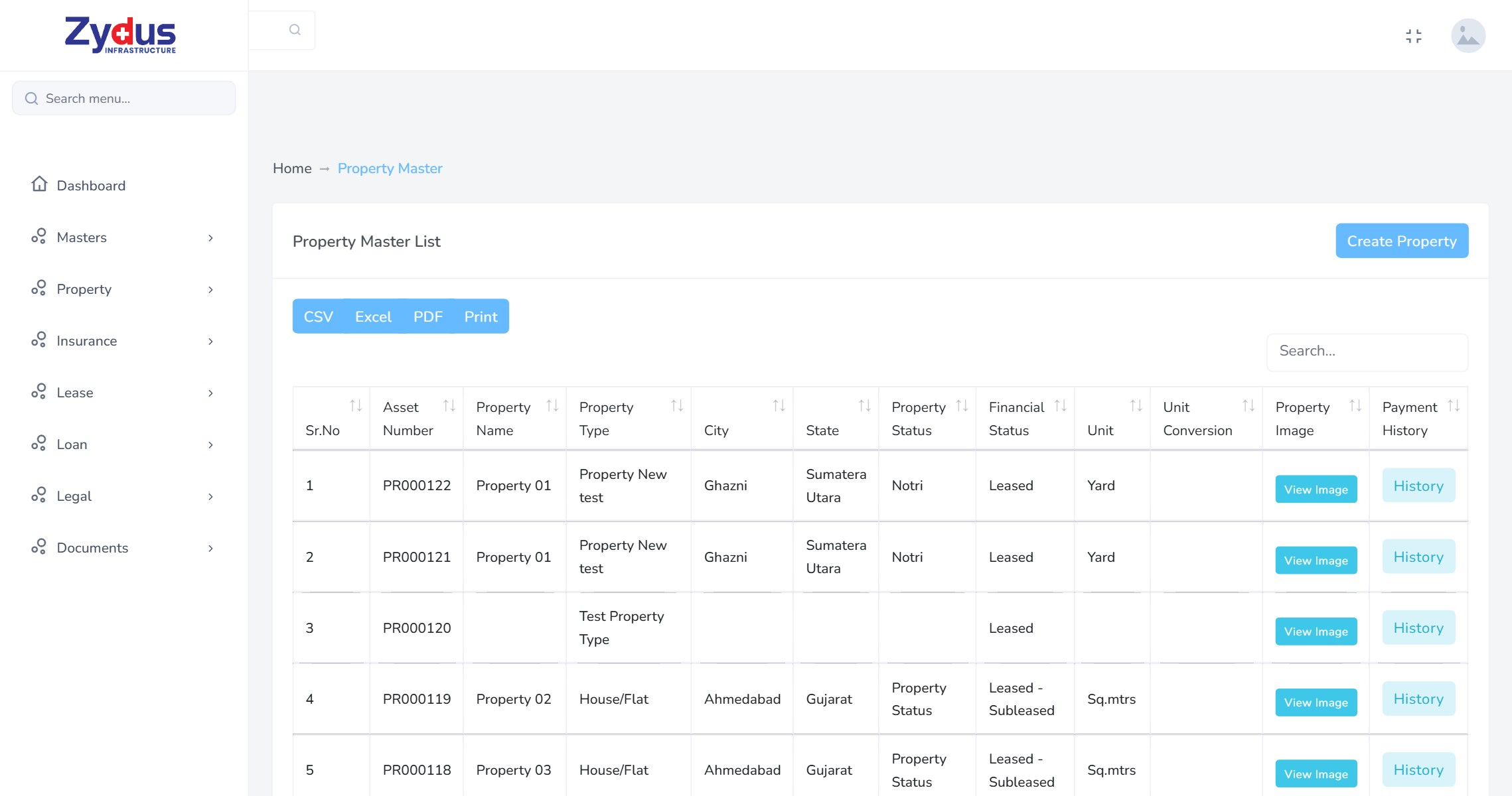
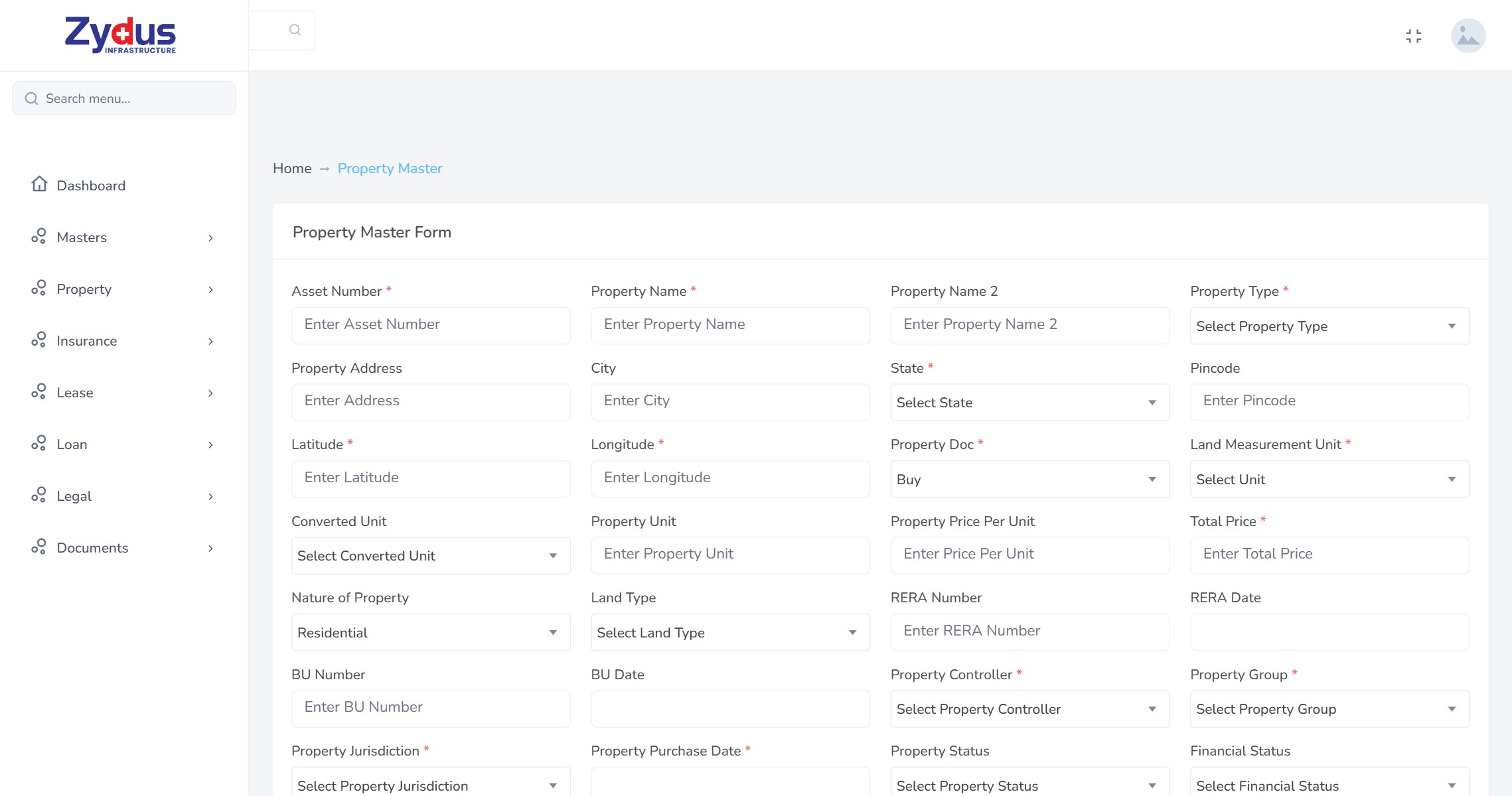
Each property carries an asset number, names, address, city, state, pincode and latitude and longitude, so a parcel can be found on the ground and not only in a file.
Area is held in the unit the record uses, with a converted unit alongside and conversion formulas maintained as editable master data.
Building use permission and project registration references are held with their dates against the property they belong to.
Property jurisdiction is recorded because it determines which authority and which enabling law governs the asset, which differs inside an industrial estate.
Separate status fields track the physical and financial position of an asset, including whether it has been sold.
A property, a policy and a loan each carry a marker showing that the asset stands as security, so encumbered assets are visible portfolio-wide.
Policies hold insurer, policy number, type, coverage and premium amounts, agent, next premium date and expiry date, with renewal handled in place.
Policies expiring within the next twenty days appear on the dashboard with a direct route to renew them.
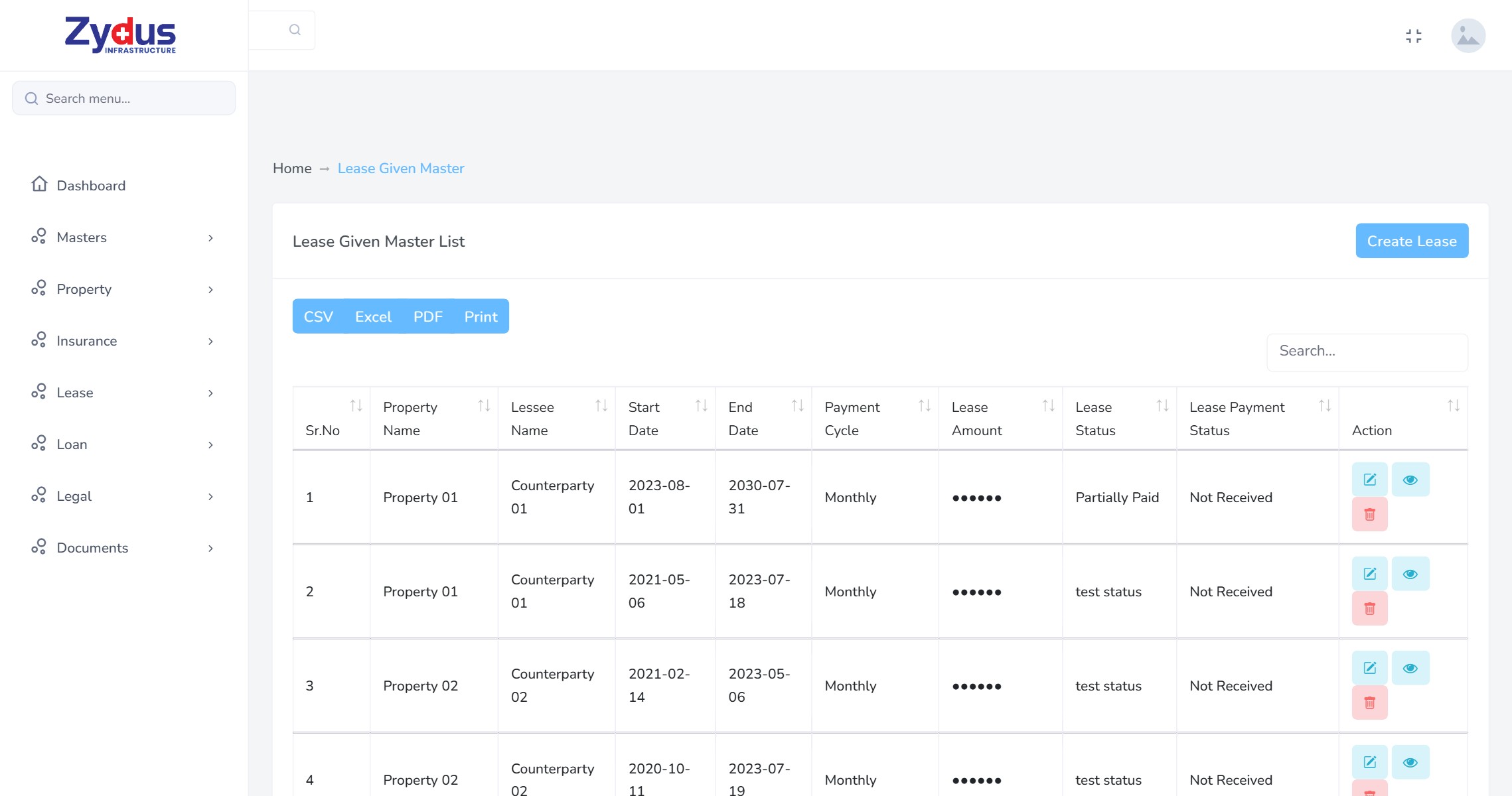
Leases granted and leases taken are separate modules with their own counterparty masters, statuses and instalment schedules.
Loans record bank, officer, beneficiary, amount, interest type, total payable, instalments, term and a reminder day, against the property securing them.
Cases record the property, case number, parties, police station, Act and section applied, case type, registration date, advocate and court authority.
Each hearing records its date, the next hearing date, the case status, comments and an uploaded document, building the history of a matter.
Fixed expenses, expense types and income types are maintained per property, so an asset's running position is more than its purchase price.
Documents are typed and attributed to an issuing authority, with general upload and view separate from the records they support.
Sold properties move to their own register through a buy and sell process, so the live portfolio and the historical one stay distinct.
Inside the platform
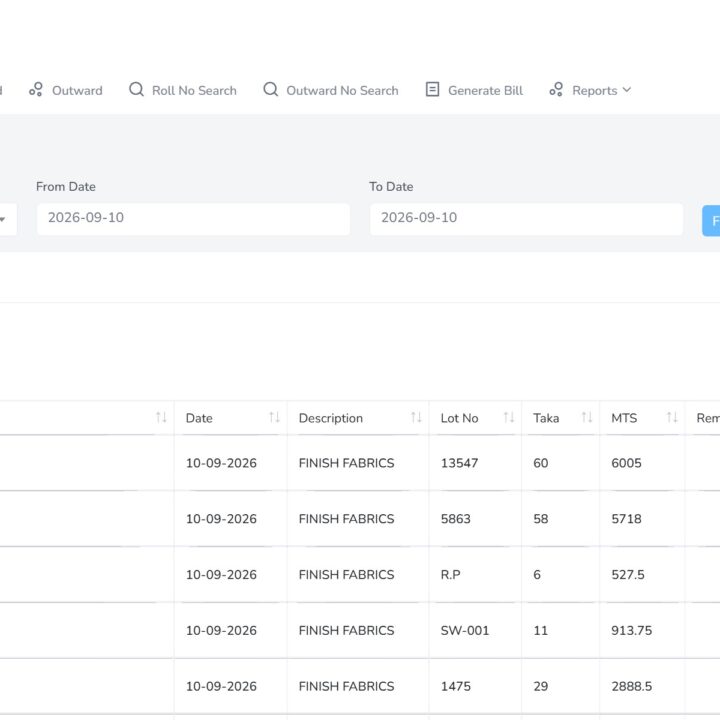
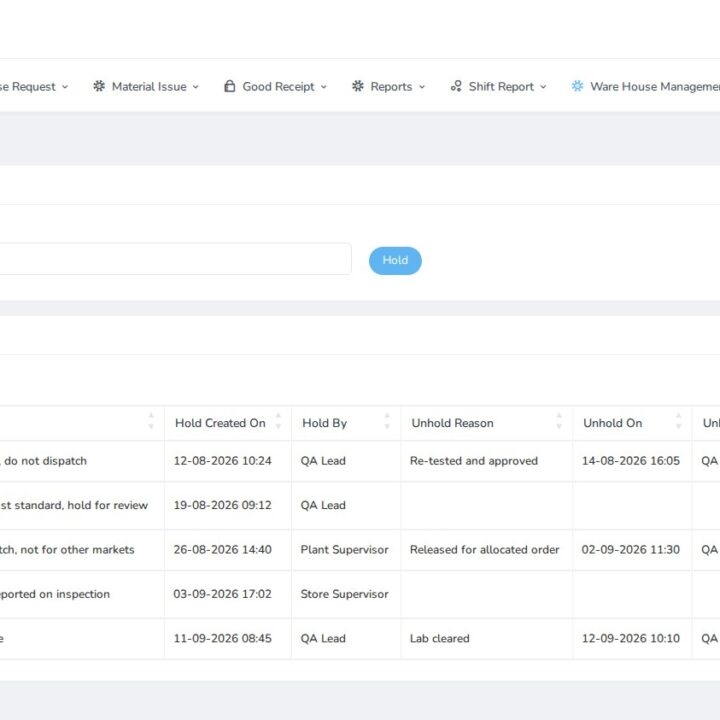
Screens from the live system. Property names, insurers, banks, counterparties, policy and case numbers and all monetary values are masked; structure and workflow are unchanged.
A property record holds what you would expect and one thing you might not: two measurement units and a conversion. That exists because Indian land area is recorded in customary units that were never standardised. Bigha and vigha vary between states and sometimes between districts, while the unit that governs a transaction is the square metre under the Legal Metrology Act.
So an old sale deed may recite vighas, the revenue record hectares and square metres, a municipal file square metres and a valuation square yards. Applying one hard-coded factor across a portfolio manufactures discrepancies silently. Holding the source unit, the converted unit and an editable conversion formula keeps the arithmetic visible and arguable, which is the correct behaviour for a number that may be tested in court.
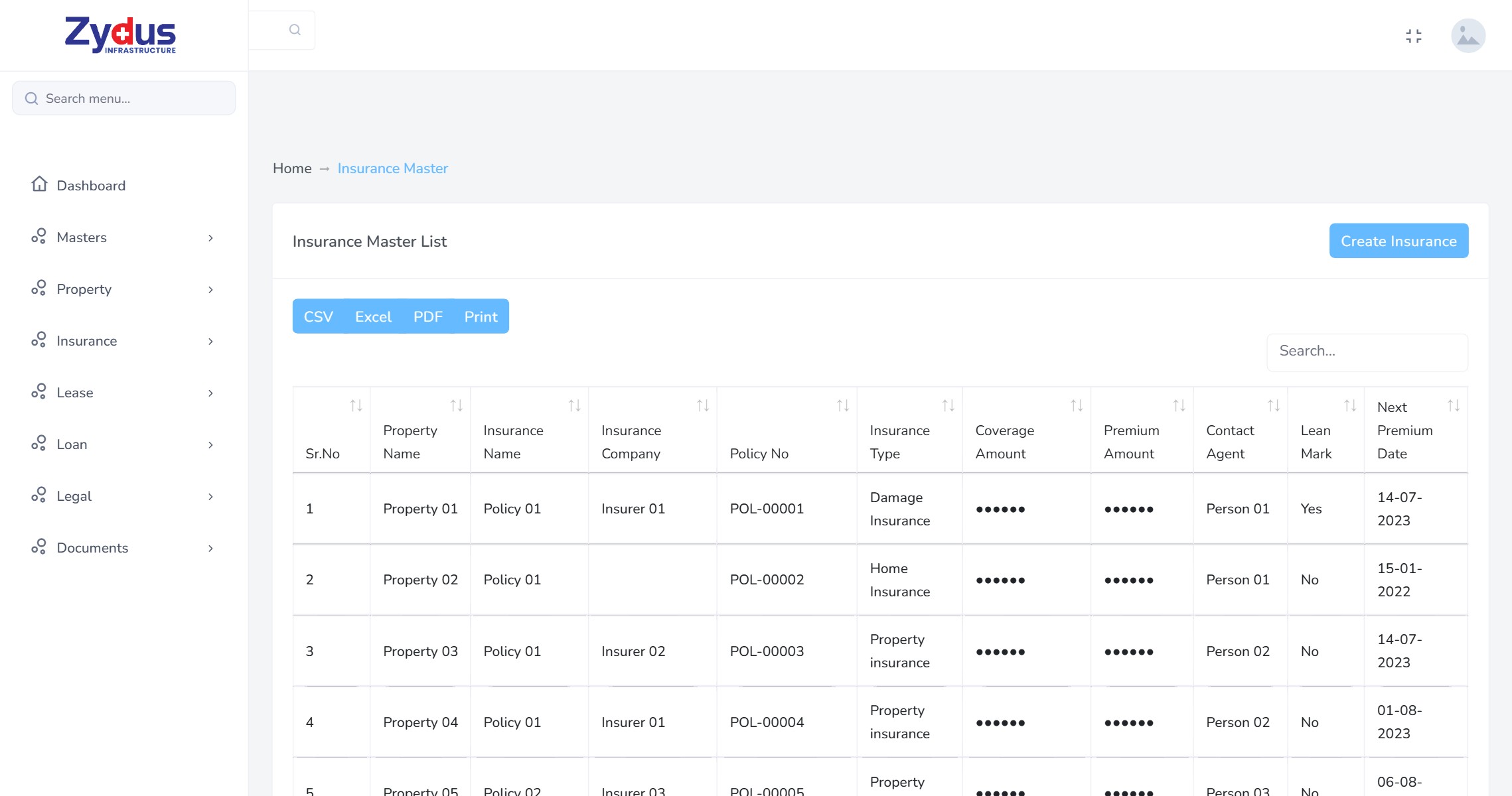
Since April 2021 the standard fire products insurers must issue for commercial and industrial risks are banded by value at risk at a single location. Below five crore, one product applies; between five and fifty crore, another; above that, a standard fire and special perils or bespoke form. A site can move between bands as capital expenditure lands.
That makes cover a per-location question that changes over time, rather than a portfolio-wide policy decision made once. Holding coverage, premium, type and both key dates against the individual property is what lets a renewal be checked against what the site now is, rather than what it was.
The system separates leases the group grants from leases it takes, each with its own counterparty master, status master and instalment schedule. As lessor the concern is collection and renewal; as lessee it is commitment and exit.
Both share a legal trap worth stating. A lease from year to year, for a term exceeding one year, or reserving a yearly rent must be made by registered instrument under the Transfer of Property Act, and is compulsorily registrable under the Registration Act. Those three limbs are alternatives, so the familiar eleven-month agreement escapes the first two and can still be caught by the third if the rent is expressed annually. An unregistered lease that should have been registered does not operate to create the leasehold interest and is not receivable as evidence of the transaction, which is a poor position to discover during a dispute. Holding start date, end date, payment cycle and status as structured fields is what makes that reviewable across a portfolio.
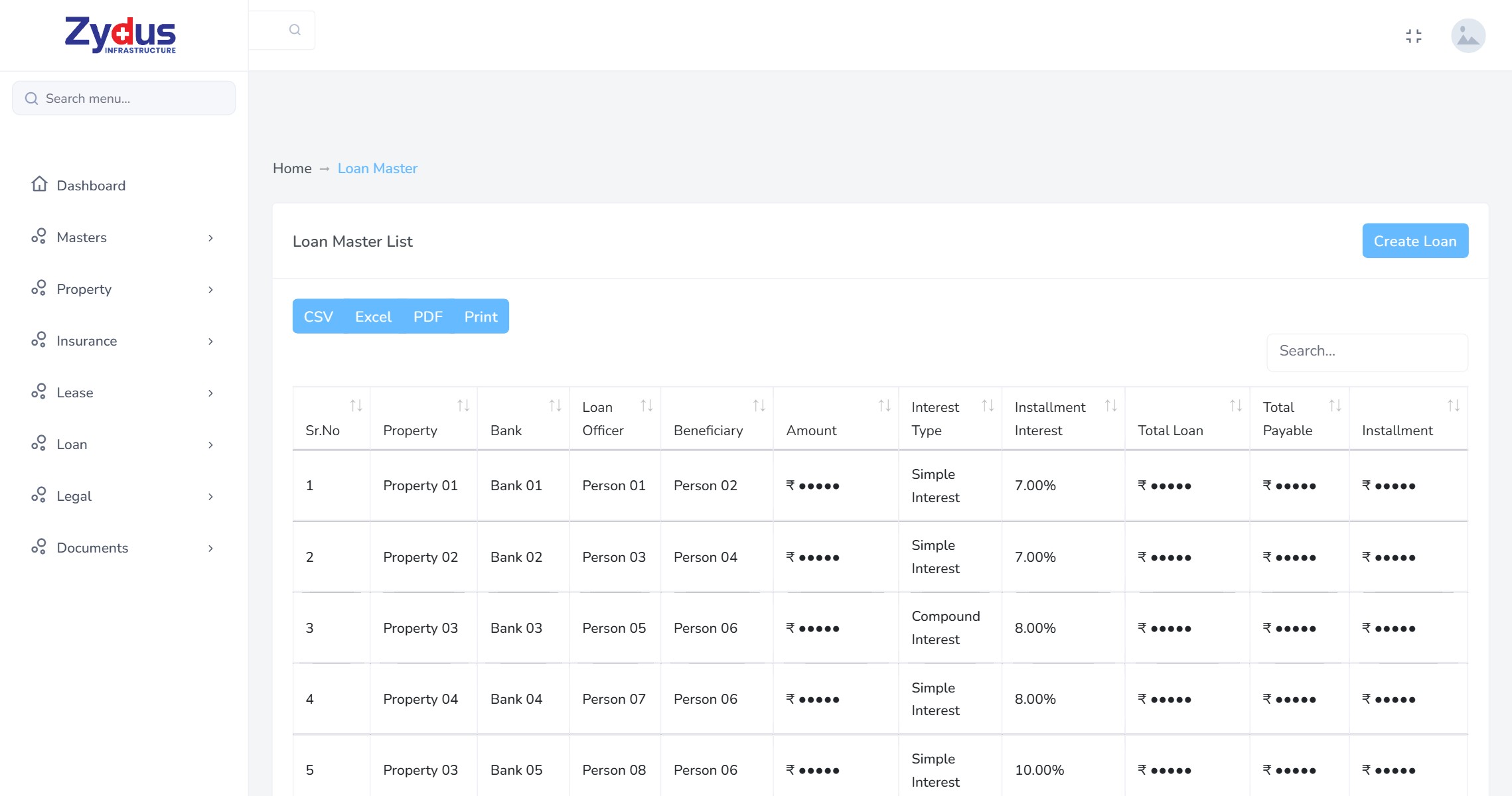
Loans are recorded against the property securing them, with the bank, the officer, the beneficiary, the interest basis, the instalment and the term. A marker on the property, the policy and the loan shows that the asset stands as security.
Worth being accurate about the language, since the interface uses the common shorthand. Indian law speaks of mortgages and charges rather than liens over immovable property, and a mortgage other than one by deposit of title deeds requires a registered instrument. Gujarat additionally requires a notice of intimation to be filed where a mortgage is created by deposit of title deeds. So the marker in the system is an operational flag telling a portfolio manager that an asset is committed, not a statement of the legal instrument behind it. That is the right division: the software tracks the position, the deed proves it.
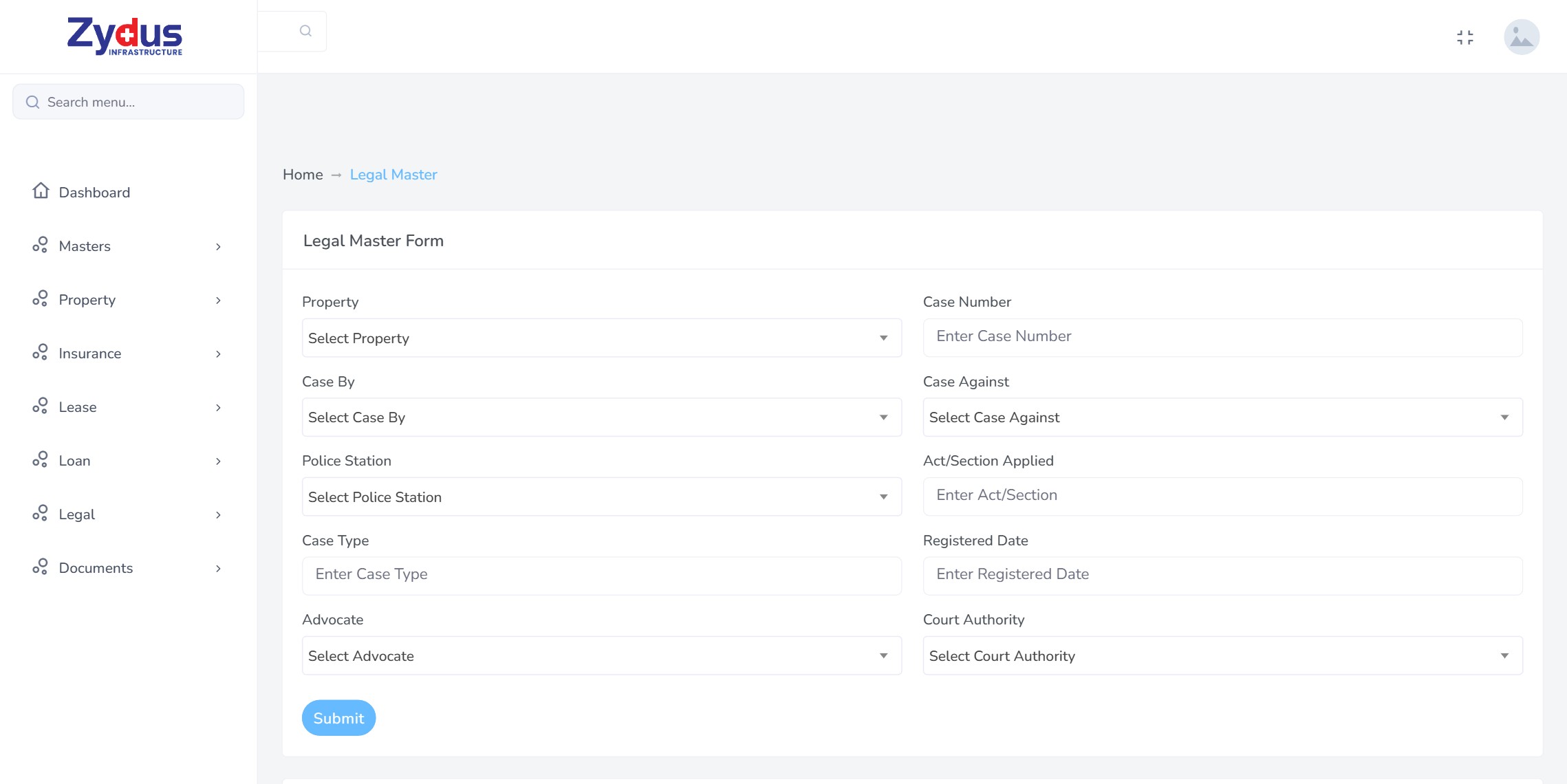
Matters are registered against the property they concern, with the case number, who brought it and against whom, the police station where relevant, the Act and section applied, case type, registration date, the advocate and the court authority.
That structure matters because land litigation in India runs for years and outlasts the people managing it. A case recorded only in an advocate's file leaves the owner dependent on someone else's diary for a matter concerning its own asset.
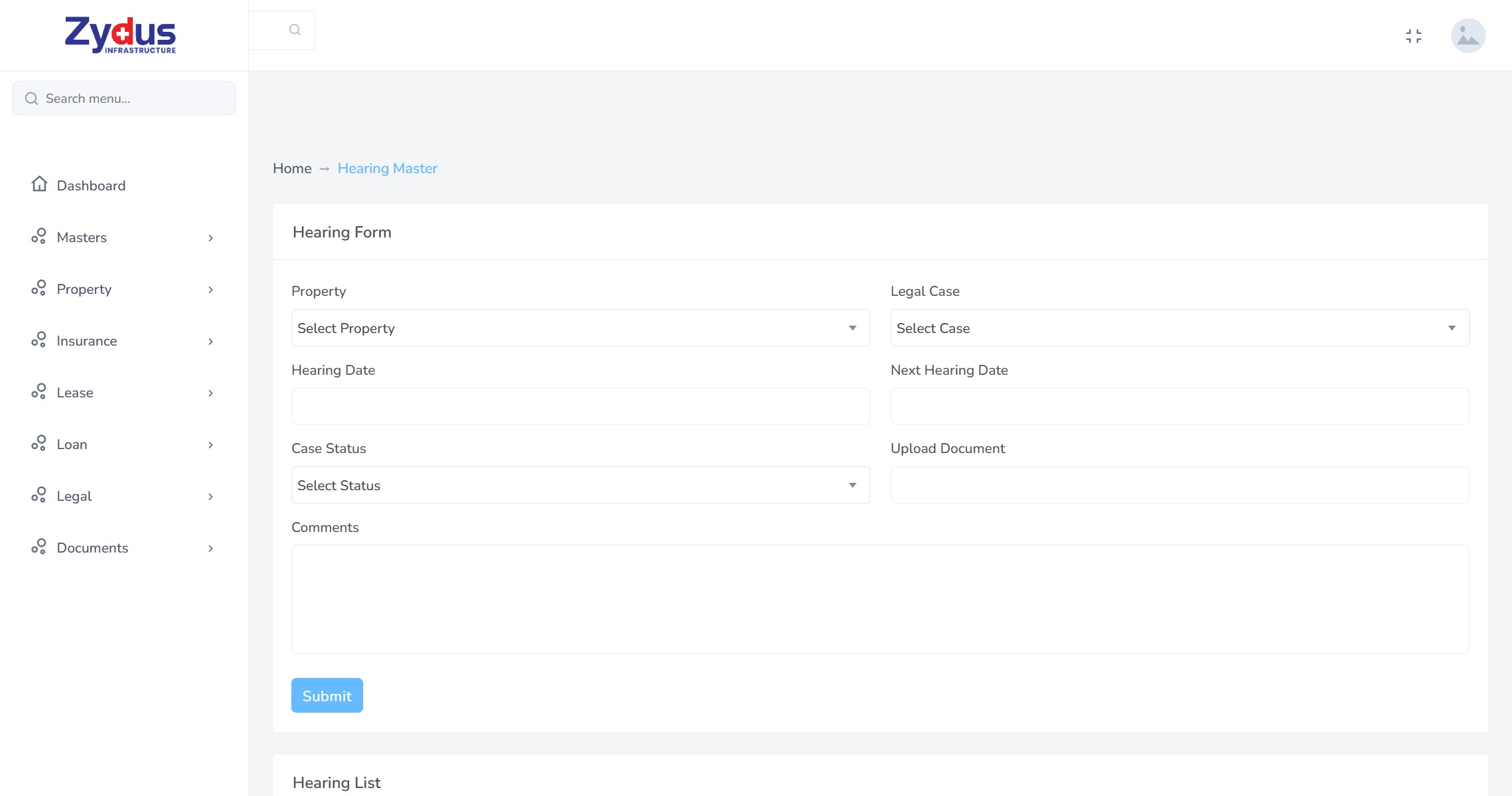
Every hearing records what happened, the resulting status, any document and the next hearing date. Because the next date lives on the hearing rather than on the case, the diary advances as the matter does.
The dashboard then lifts the next twenty days into view. This is the least sophisticated part of the system and arguably the most valuable, because the consequence of missing a listed date is not administrative inconvenience. It is an order made without your argument being heard.
How it holds together
The property is created once. Everything after it accumulates against that record for as long as the group holds the asset.
Impact
The asset has one file. Insurance, leases, borrowing and litigation stop living in four departments and four formats.
Deadlines arrive before they bite. Renewals and hearings are surfaced with time to act rather than discovered afterwards.
Encumbrance is visible. Which assets are committed as security can be answered from the portfolio rather than from the loan files.
Area is honest. Source unit and conversion are both held, so a disputed measurement can be traced rather than defended from a single number.
Litigation outlives its custodians. Case history sits with the owner, not only with whichever advocate held the matter.
Disposals keep their past. Sold assets move to their own register with the record that supported them.
Engineering approach
Unit conversion formulas are editable master records because customary land units are not standardised and a factor hard-coded once will be wrong somewhere.
It is a real field, not a label, because the authority and the enabling law governing a building differ between a municipal area and an industrial estate.
Next premium and expiry are tracked separately, since cover is lost as easily by a missed instalment as by reaching term end.
Granting and taking a lease are different obligations with different counterparties, so they are separate modules rather than one with a direction flag.
Putting it on the event rather than the case means the diary advances naturally as the matter progresses.
Security markers tell a manager an asset is committed. The instrument that creates the security stays where it belongs, in the registered deed.
Common questions
Because Indian land title is presumptive. The state registers transactions rather than guaranteeing ownership, so the holder's own records are part of what protects the asset. A folder holds documents; it does not tell you which policy expires next week or which matter is listed on Tuesday, and those are the failures that cost money.
No, and this is a common misunderstanding. Under section 3(1) of the Real Estate (Regulation and Development) Act 2016, registration attaches to a real estate project being developed for sale and is granted to the promoter. It is not issued to a landowner and not issued per plot. A field for it is useful where a property is connected to a registered project, but owning industrial land does not by itself produce a RERA number.
Because the records disagree. Bigha and vigha are customary units that were never standardised and vary between states and sometimes between districts, while the unit governing a transaction is the square metre under the Legal Metrology Act. An old deed, a revenue record and a valuation may each state area differently. Holding the source unit alongside the conversion keeps the discrepancy visible instead of averaging it away.
Usually, but not automatically. The Transfer of Property Act and the Registration Act catch leases from year to year, for a term exceeding one year, or reserving a yearly rent. Those limbs are alternatives, so an eleven-month agreement with rent expressed as an annual figure can still be compulsorily registrable. An unregistered lease that should have been registered does not create the leasehold interest and is not receivable as evidence of the transaction.
It is an operational flag meaning the asset is committed as security for borrowing. Indian law deals in mortgages and charges over immovable property rather than liens, and a mortgage generally requires a registered instrument, with Gujarat additionally requiring a notice of intimation where a mortgage is created by deposit of title deeds. The system records the position so a portfolio manager can see it; the deed remains what proves it.
The structure suits any organisation holding property across jurisdictions with insurance, borrowing, tenancy and litigation attached. What changes is the classification scheme, the permissions tracked and the conversion factors, all of which are master data rather than code. We start by looking at how the existing records are actually kept, including the parts held in someone's spreadsheet.
Why Div Systems
We build operational systems for organisations whose records have to hold up years later, in front of an auditor, an insurer or a court. The work starts by reading the obligations behind the process, and ends with something the people responsible for those records will actually keep current.
Start your project